Texas insurance guide · 8 minute read
How roof age affects homeowners insurance in Texas
There is no single roof-age cutoff used by every Texas insurer. Age matters because it can affect eligibility, inspection results, claim settlement, deductibles, and whether the roof is covered at replacement cost or depreciated value.
InsuredNear editorial review · Last reviewed August 15, 2026
Age is a signal, not the entire decision
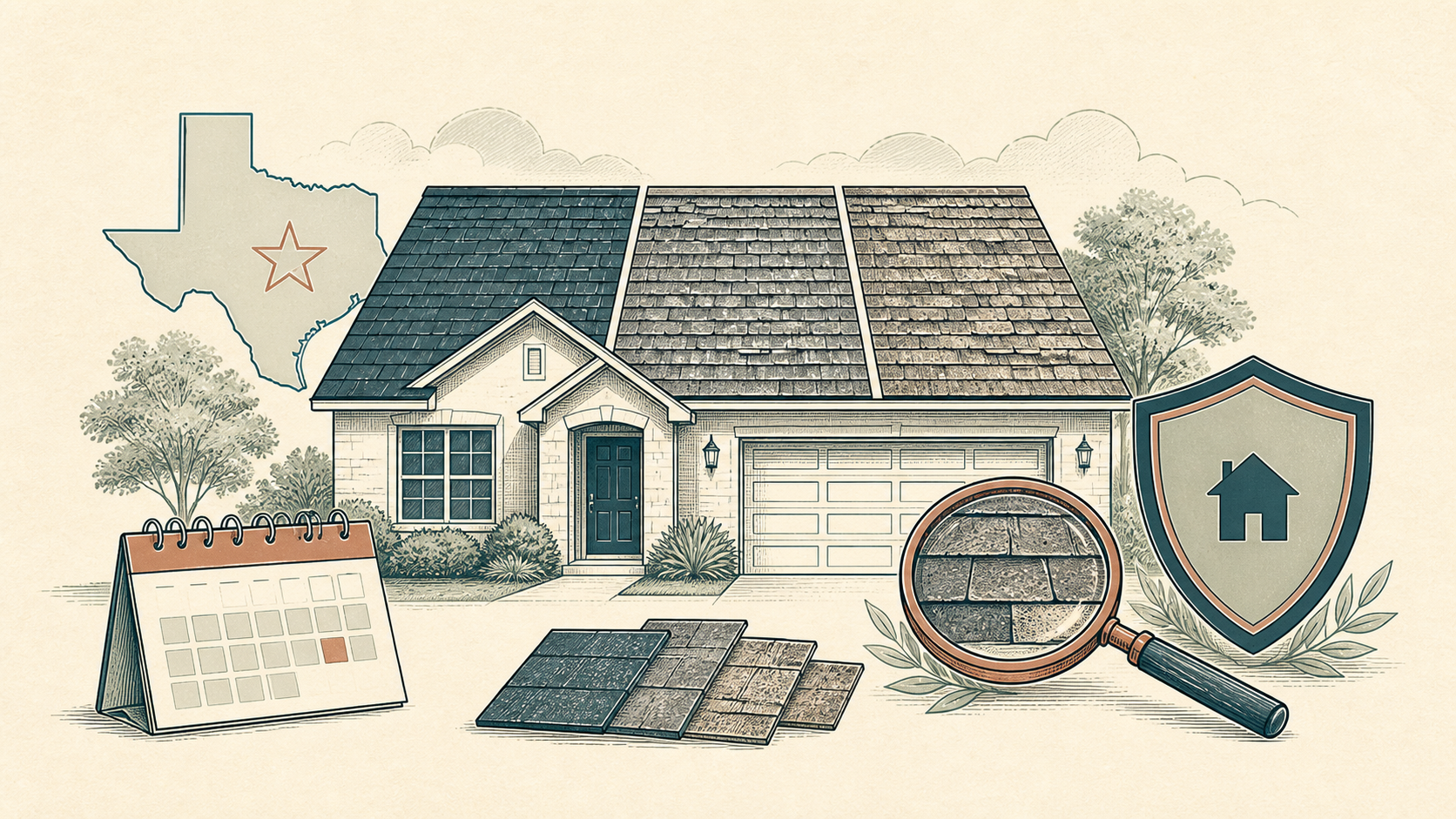
Short answer: insurers commonly evaluate both roof age and condition, but there is no universal Texas rule that makes every roof uninsurable at a particular birthday. Material, installation, maintenance, visible deterioration, storm damage, repair history, and the insurer's underwriting rules can all matter.
Verify the roof year on every application and declarations page. If the date is wrong, provide a paid invoice, permit, inspection, warranty, or other reliable documentation. Never report a roof as newer merely because sections were repaired.
Age can affect whether an insurer offers coverage
An insurer may inspect the roof when a homeowner applies or renews. Missing or curling shingles, active leaks, deteriorated flashing, unrepaired damage, and overhanging limbs can affect the result. A company may charge more, restrict roof coverage, request repairs, or decline the risk based on what it finds.
Texas consumer protections distinguish a home's age from its condition. The Texas Consumer Bill of Rights says a company may not nonrenew based on the property's age alone, but may consider the condition of the roof and other systems. Ask for the exact underwriting reason and any inspection evidence if a roof causes a decline or nonrenewal.
Replacement cost and actual cash value produce different results
Replacement-cost coverage generally uses the current cost of covered roof repair or replacement, subject to limits, deductibles, policy terms, and completion requirements. Actual cash value subtracts depreciation for age and wear. The difference can leave a large homeowner contribution after a storm. TDI explains that a replacement-cost roof claim may be paid in stages, with an initial payment followed by withheld amounts after repairs begin and the policy's requirements are met.
For example, suppose covered roof replacement costs $20,000 and the deductible is $5,000. Replacement-cost treatment could leave the homeowner responsible for the deductible, while actual-cash-value treatment could also subtract substantial depreciation. The insurer's estimate and policy determine the actual payment, so request a written illustration rather than relying on the label alone.
Read roof endorsements at application and renewal
A policy described generally as replacement cost may settle the roof differently from the dwelling or belongings. Look for an actual-cash-value roof endorsement, roof payment schedule, cosmetic-damage exclusion, matching limitation, or age-based change in settlement.
Review every renewal notice. In its current roof insurance guidance, TDI says some companies switch aging roofs to actual-cash-value treatment and that the company should disclose a coverage change. Compare the new form and endorsements with the expiring policy before paying the renewal premium.
- How is the roof settled today?
- Does settlement change at a specified age?
- Is depreciation recoverable after completed repairs?
- Is cosmetic hail damage excluded or limited?
- Are matching undamaged materials addressed?
- What inspection or maintenance conditions apply?
Convert the storm deductible to dollars
Wind and hail losses may use a different deductible from fire, theft, or other causes. Percentage deductibles are commonly based on the dwelling limit, not on the claim amount.
At a $500,000 dwelling limit, 1% equals $5,000, 2% equals $10,000, and 3% equals $15,000. Combine that amount with any depreciation or uncovered work when estimating what a roof claim might require from the homeowner.
A new roof can help, but document it correctly
A sound new roof may improve eligibility or qualify for discounts, particularly when materials meet recognized wind, hail, or fire standards. Results vary by insurer and property. Ask which documentation and construction features the insurer recognizes before selecting materials solely for an insurance benefit.
Retain the contract, itemized invoice, proof of payment, material specifications, permit, photographs, and warranty. Notify the insurer after completion and request written confirmation that its roof-age record and any applicable discount or settlement provision were updated.
Questions to ask the agent
The goal is not merely to find a policy that accepts the roof. It is to understand what the homeowner would receive after a covered roof loss.
- What roof age and material are recorded?
- Will the insurer inspect before or after binding?
- Is the roof replacement cost, actual cash value, or subject to a schedule?
- What is the wind and hail deductible in dollars?
- Are cosmetic damage, matching, or code upgrades restricted?
- Will the coverage change at the next renewal because of age?
- Which documents could correct or improve the underwriting result?
Use this quote comparison worksheet
Fill in the policy form or endorsement, not just an agent's verbal description. Use each row as a question when you compare quotes.
| Compare | Quote A | Quote B | Quote C |
|---|
Sources and official tools
Texas-specific guidance on this page was reviewed against these official consumer resources.
- TDI: Insurance and your roof
Official guidance on roof inspections, replacement cost, actual cash value, deductibles, claims, and maintenance.
- TDI home insurance guide
Texas policy and claim examples, including replacement cost and depreciation.
- TDI home insurance shopping guide
Questions to ask about policy form, settlement, deductibles, and additional coverage.
- Texas Consumer Bill of Rights
Rights involving older homes, property condition, nonrenewal, and material changes.