Texas insurance guide · 7 minute read
Texas wind and hail deductibles explained in dollars
A percentage deductible is usually applied to the insured dwelling limit, not the repair bill. Convert it to dollars before comparing premiums, then check which events trigger it and whether a separate named-storm deductible exists.
InsuredNear editorial review · Last reviewed August 15, 2026
Use the dwelling limit, not the claim amount
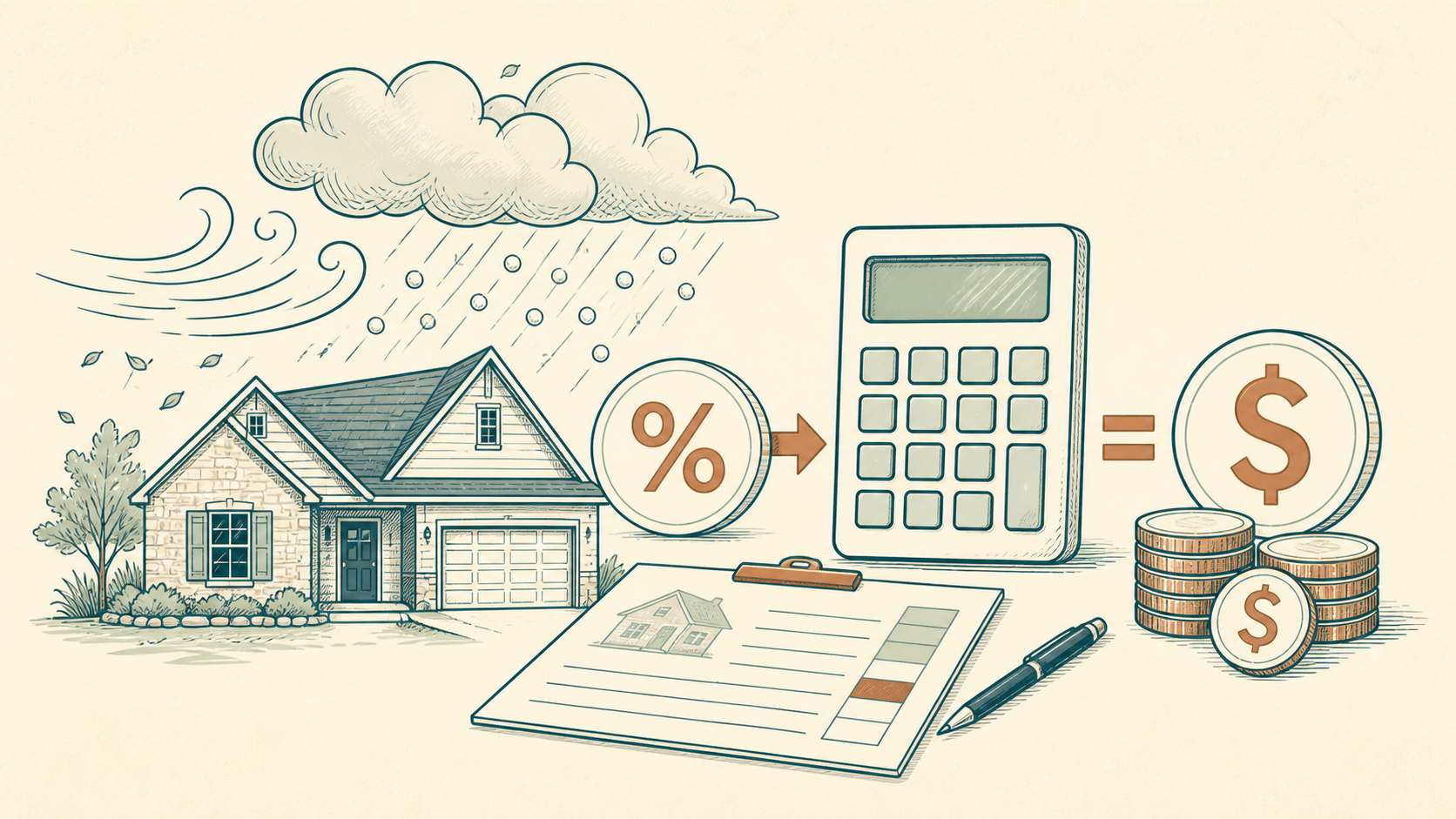
Short answer: a 2% wind and hail deductible on a home insured for $400,000 generally means $8,000, even if the covered repair costs $25,000. The declarations page and policy control the calculation, so verify the base and wording for each quote.
A deductible is the portion of a covered loss the policyholder bears before the insurer's payment. It is not normally a fee sent to the insurer. Never assume that 2% means the insurer simply subtracts 2% from the repair invoice.
Convert common percentages
Use this common comparison formula: dwelling limit multiplied by deductible percentage equals the deductible in dollars. The policy may define a different base, and the declarations page should show the exact dollar amount, so verify both before relying on the examples.
- $300,000 dwelling: 1% = $3,000; 2% = $6,000; 3% = $9,000
- $400,000 dwelling: 1% = $4,000; 2% = $8,000; 3% = $12,000
- $500,000 dwelling: 1% = $5,000; 2% = $10,000; 3% = $15,000
- $750,000 dwelling: 1% = $7,500; 2% = $15,000; 3% = $22,500
- $1,000,000 dwelling: 1% = $10,000; 2% = $20,000; 3% = $30,000
Identify every deductible on the policy
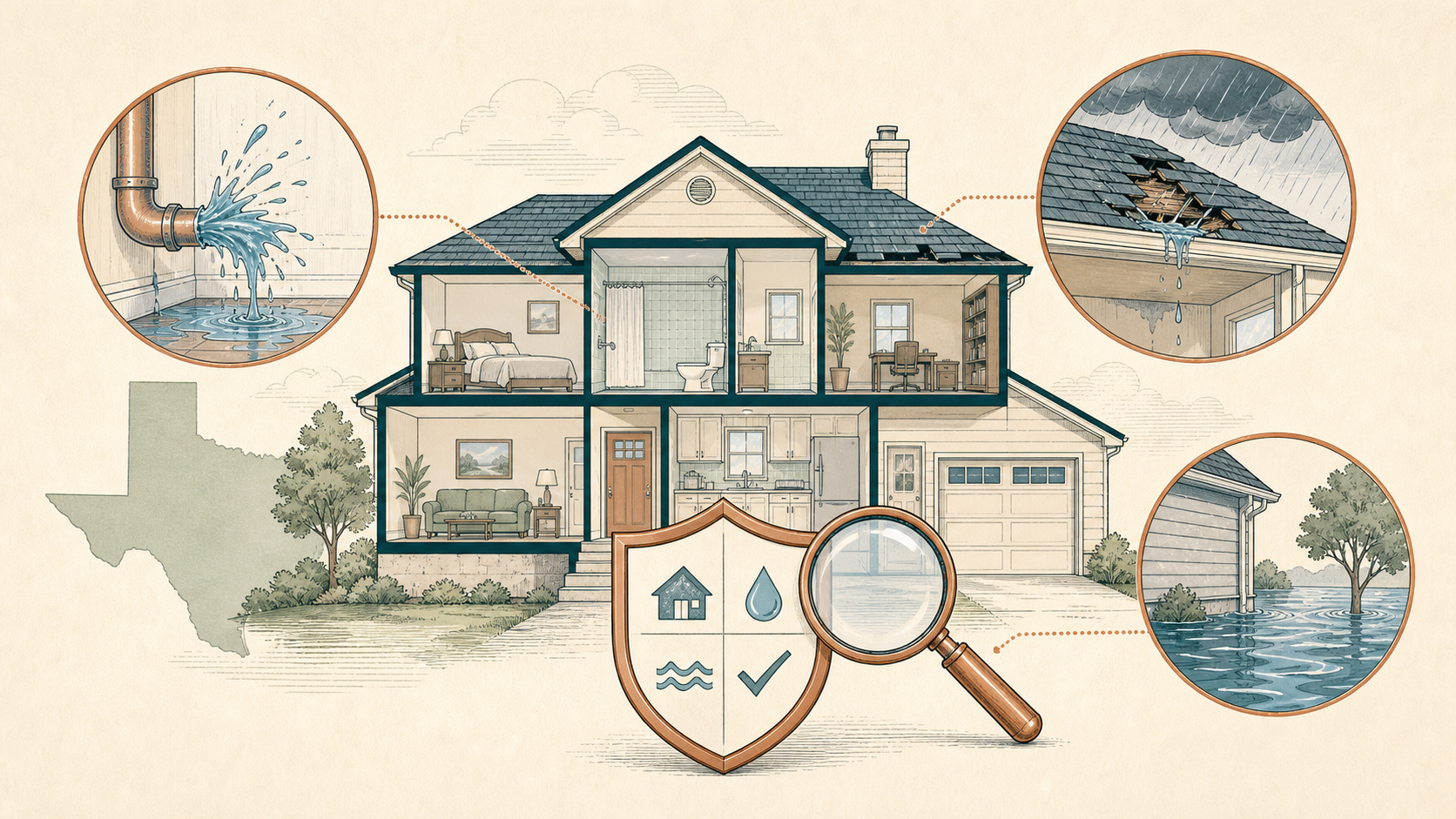
Texas policies may show a flat-dollar deductible for other perils and a separate percentage for wind and hail. Some arrangements distinguish named storms or hurricanes. Coastal homeowners may have wind and hail in a separate policy altogether.
Ask the agent to explain which deductible would apply to hail, a tornado, straight-line wind, a named tropical storm, a hurricane, fire, theft, and water released by storm damage. Examples help expose differences that a declarations-page label may not resolve.
- All other perils
- Wind and hail
- Named storm
- Hurricane
- Flood policy deductibles
- Separate building and contents deductibles
Do not compare the deductible by itself
A lower deductible may carry a higher premium, but a higher deductible can make smaller losses entirely self-funded. Compare the annual savings with the additional cash you would need after a plausible storm.
Also compare roof settlement. A large percentage deductible combined with actual-cash-value roof coverage can produce much more out-of-pocket expense than either provision suggests alone. Limits, exclusions, cosmetic-damage language, and code-upgrade coverage also affect the result.
Test each quote with the same loss
Suppose a home has a $500,000 dwelling limit and covered storm repairs total $30,000. Before considering depreciation or other policy terms, a 1% deductible is $5,000 and a 2% deductible is $10,000. The second policy shifts another $5,000 of that event to the homeowner.
Now ask whether the roof is replacement cost or actual cash value, whether any damaged items are excluded, and whether more than one policy responds. The final insurer payment can differ because limits, depreciation, exclusions, and other policy provisions still apply. The exercise is not a claim estimate; it is a way to compare the financial structure consistently.
- $500,000 dwelling limit with a 1% deductible: $5,000 deductible; on a $30,000 covered loss, $25,000 remains before depreciation and other policy terms.
- $500,000 dwelling limit with a 2% deductible: $10,000 deductible; on a $30,000 covered loss, $20,000 remains before depreciation and other policy terms.
Plan for the deductible before storm season
Choose a deductible the household could pay without delaying necessary repairs. Maintain documentation of the dwelling limit and any renewal changes, because a percentage deductible grows when the limit increases.
The Texas Department of Insurance says it is illegal for a contractor to waive a property-insurance deductible or help a policyholder avoid paying it. Treat rebates, credits, inflated estimates, or other promises to make the deductible disappear as warning signs. Texas Insurance Code Chapter 707 also permits an insurer to require reasonable proof that the policyholder paid the deductible before releasing withheld replacement-cost amounts.
Questions for the agent
Request written answers tied to the proposed policy rather than a general explanation of how deductibles usually work.
- What dollar amount does each percentage equal today?
- Which dwelling limit is used in the calculation?
- Which weather events trigger each deductible?
- Can the deductible change at renewal?
- Could separate wind and flood claims create separate deductibles?
- How do roof depreciation and the deductible interact?
- Does the mortgage impose any deductible restrictions?
Use this quote comparison worksheet
Fill in the policy form or endorsement, not just an agent's verbal description. Use each row as a question when you compare quotes.
| Compare | Quote A | Quote B | Quote C |
|---|---|---|---|
| Dwelling limit used for the calculation | |||
| All-other-perils deductible | |||
| Wind and hail deductible | |||
| Named-storm or hurricane deductible | |||
| Dollar amount of every percentage | |||
| Events that trigger each deductible | |||
| Roof settlement after the deductible | |||
| Separate wind policy, if any |
Sources and official tools
Texas-specific guidance on this page was reviewed against these official consumer resources.
- TDI home insurance guide
Official explanations of deductibles, policy limits, and Texas homeowners coverage.
- TDI declarations page guide
Where to find home, wind and hail, and other-perils deductibles.
- TDI home insurance shopping guide
Questions for comparing deductibles and coverage.
- OPIC residential property shopping guide
Independent Texas guidance on comparing policy costs and protection.
- TDI contractor deductible guidance
Texas guidance on illegal deductible waivers, rebates, proof of payment, and reporting concerns.
- Texas Insurance Code Chapter 707
State law addressing payment of property-insurance deductibles and reasonable proof of payment.