Texas insurance guide · 12 minute read
Houston home insurance: separating wind, flood, and water risks
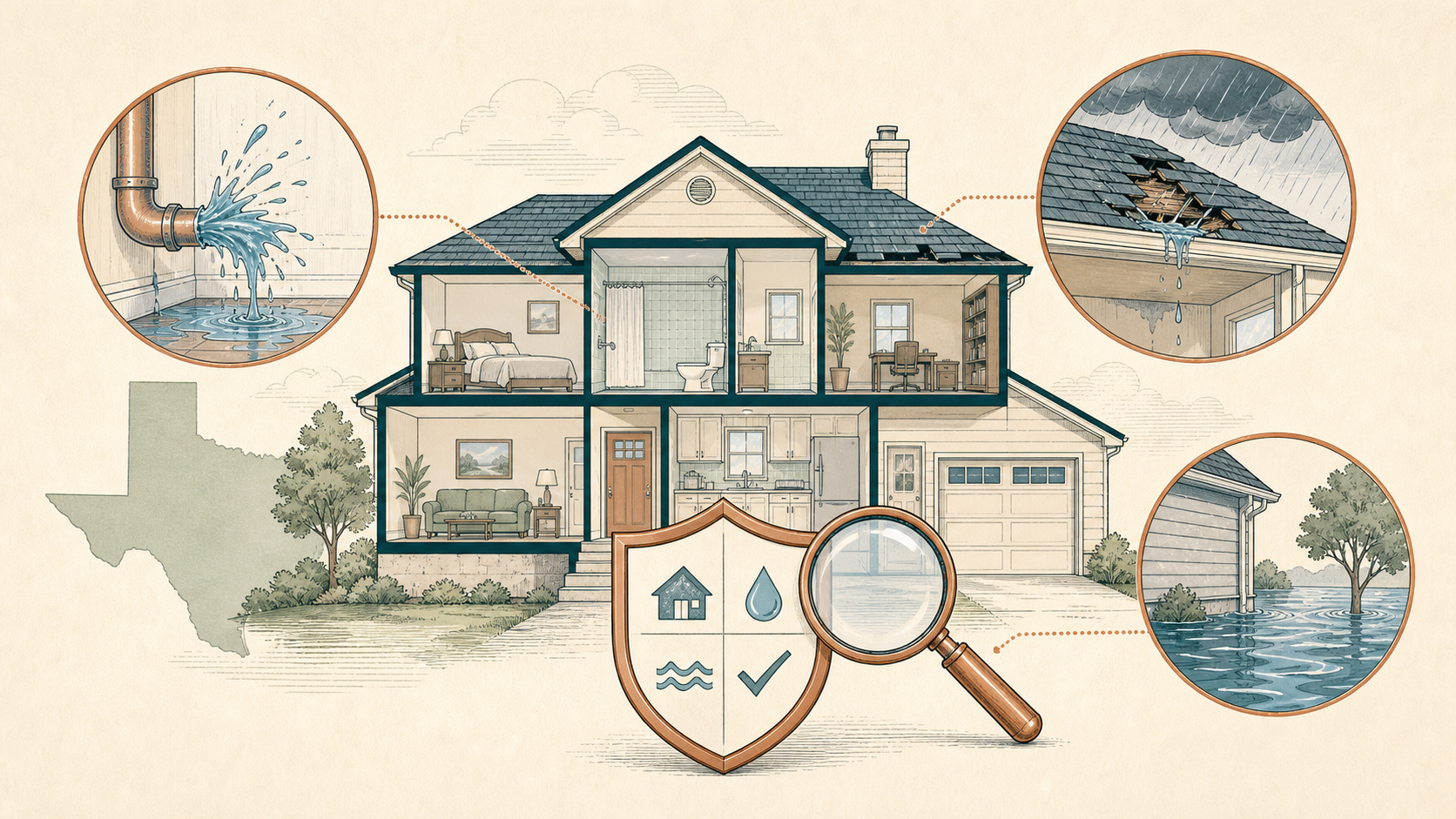
Houston households often need to evaluate several distinct sources of water and storm loss. The key is identifying which policy, deductible, and exclusion applies to each one.
InsuredNear editorial review · Last reviewed August 9, 2026

Start with the property address
Confirm whether homeowners includes wind and hail. Check whether the address is in TWIA’s designated area and whether certification or inspection applies. Review FEMA mapping, elevation, drainage, and prior losses. Compare NFIP and available private flood proposals, then align insured names, address, values, mortgagee, and effective dates across policies.
Treat flood as a separate decision
Standard homeowners policies commonly exclude flood from rising or accumulating surface water. A home outside a lender-designated high-risk zone can still flood. Compare building and contents limits, enclosures, settlement, lender acceptance, and improvements.
An NFIP policy generally begins 30 days after purchase, although federal exceptions apply. Private-policy waiting periods vary. Confirm the exact effective date. NFIP does not include additional living expenses, so check homeowners, wind, NFIP, and private-flood proposals separately.
Know exactly where TWIA fits
TWIA is a residual wind and hail market, not a general Houston homeowners insurer. Its designated catastrophe area includes 14 first-tier coastal counties and parts of Harris County east of Highway 146. Eligibility includes private-market denial, location and condition requirements, and applicable windstorm certification. Some V-zone properties must maintain flood insurance. Do not assume every Houston or Harris County address qualifies.
Map each loss to a policy question
Use the worksheet as a discussion guide, not a coverage promise. Wind-created openings followed by rain, rising surface water, sewer backup, a sudden pipe break, and repeated seepage can be treated differently. The cause, wording, exclusions, endorsements, and evidence control.
When wind and flood occur in one storm, document damage carefully and ask how separate deductibles, adjusters, and claims contacts work. Do not assume one policy pays all living expenses or one deductible governs the event.
Review roof, water, and settlement details
Check roof replacement-cost versus depreciated settlement, cosmetic-damage and matching terms, mold, foundation, plumbing access, repeated leakage, water-backup limits, and special deductibles. Bring current declarations, elevation information, roof details, updates, claims, mortgage requirements, photos, and a contents inventory.
Use this quote comparison worksheet
Fill in the policy form or endorsement, not just an agent's verbal description. Use each row as a question when you compare quotes.
| Compare | Quote A | Quote B | Quote C |
|---|---|---|---|
| Wind removes shingles and rain enters through the opening | |||
| Rising water enters from a street, bayou, or widespread surface flooding | |||
| Sewer or drain backs up | |||
| A pipe suddenly bursts inside the home | |||
| Repeated leakage damages flooring or foundation | |||
| Hail causes roof or cosmetic damage | |||
| Wind and flood damage occur in the same storm | |||
| Applicable policy, limit, deductible, settlement method, and claim contact for each scenario |
Sources and official tools
Texas-specific guidance on this page was reviewed against these official consumer resources.
- TDI home, flood, and wind guidance
Official guidance for coordinating three protections.
- TDI flood insurance guide
Texas flood shopping guidance.
- TWIA overview and eligibility
Designated-area and eligibility information.
- TWIA flood requirement
Requirements for certain TWIA properties.
- NFIP policy terms
Federal flood coverage information.
- FEMA flood maps
Official maps, which are one risk input rather than a complete verdict.