Texas insurance guide · 14 minute read
Houston small-business insurance checklist
Business insurance works best when it follows the operation: what the company owns, where it works, who it serves, how it travels, and which obligations appear in its contracts.
InsuredNear editorial review · Last reviewed August 9, 2026
Map the operation before naming policies
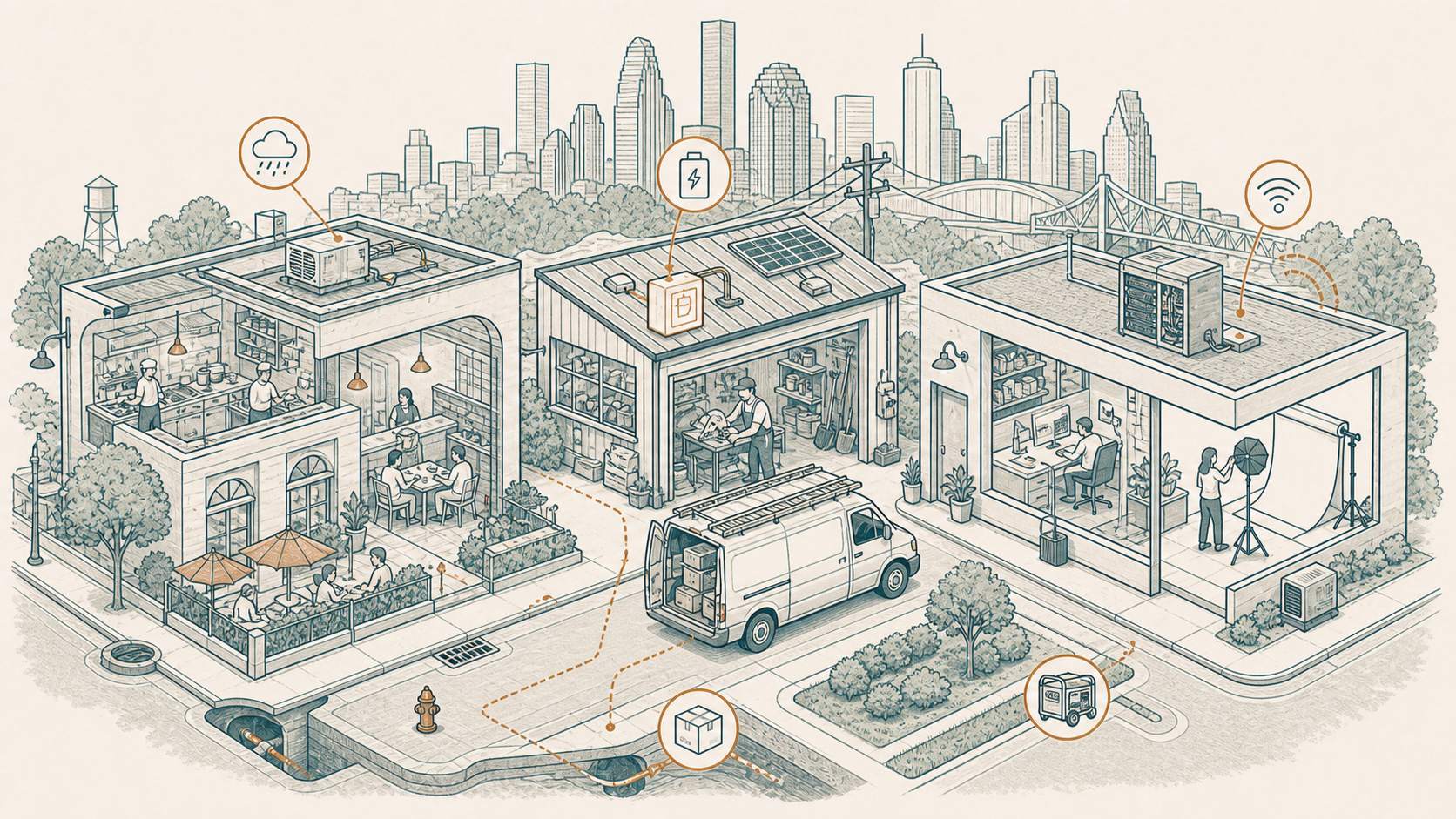
List entities, locations, revenue, payroll, employees, contractors, equipment, inventory, vehicles, digital systems, professional services, customer property, and off-premises work. Use the exposure worksheet below to decide what deserves discussion. A restaurant, contractor, professional firm, retailer, and landlord should not receive the same generic package.
Build the property and liability foundation
A business owners policy may combine property and general liability for eligible operations, but it is not universal. Basic, broad, and special causes-of-loss forms differ, and special still has exclusions. Compare building replacement cost, inventory, tenant improvements, property of others, inland marine, equipment breakdown, flood, and wind.
Give the agent actual lease and customer contract language. A certificate is evidence of coverage, not the policy or endorsement creating protection.
Make the Texas workers’ compensation decision explicitly
Most Texas private employers are not required to carry workers’ compensation, but exceptions and contract requirements exist. Employers without it become nonsubscribers and may have notice, posting, and injury-reporting duties. They also give up significant lawsuit defenses. Ask a qualified adviser about exact obligations rather than treating optional as consequence-free.
Review employee classes, payroll, owners, subcontractors, employer liability, and audit treatment. Classification, payroll, sales, and subcontractor assumptions can materially change audited premium.
Stress-test business income and Houston disruption
Business-income coverage generally requires direct physical loss or damage from a covered cause. A power outage, evacuation order, blocked access, flood, or supplier interruption does not automatically qualify. Check utility, civil-authority, dependent-property, flood, and equipment-breakdown extensions separately.
Prepare revenue and earnings, continuing payroll and expenses, seasonal peaks, realistic restoration time, temporary-premises costs, key dependencies, waiting period, coverage period, and coinsurance. Confirm separate flood and any coastal wind need.
Inspect vehicles, cyber, and professional work
Separate owned, hired or rented, and employee-owned vehicle use. For cyber, inventory data, payment systems, vendors, ransomware, social engineering, notification, interruption, limits, exclusions, and retroactive dates. Describe professional services precisely and match them to the form.
Create a submission that survives underwriting and audit
Organized, accurate information improves eligibility review and comparability.
- Operations narrative, websites, revenue, payroll, classifications, and headcount
- Locations, construction, occupancy, protection, and property values
- Vehicles, drivers, use, radius, and hired or non-owned exposure
- Five years of loss runs when available
- Licenses, leases, contracts, subcontractor controls, and safety practices
- Current policies, requested limits, effective date, and known audit exposures
Use this quote comparison worksheet
Fill in the policy form or endorsement, not just an agent's verbal description. Use each row as a question when you compare quotes.
| Compare | Quote A | Quote B | Quote C |
|---|---|---|---|
| Owns or leases a location: property, tenant improvements, and lease requirements | |||
| Owns inventory or equipment: values, valuation, causes of loss, and breakdown | |||
| Works at customer sites or transports property: liability, inland marine, and property of others | |||
| Provides advice, designs, or services: professional liability and retroactive date | |||
| Stores customer or payment data: cyber, social engineering, notification, and interruption | |||
| Owns vehicles: commercial auto, drivers, radius, and use | |||
| Uses rented or employee vehicles: hired and non-owned auto | |||
| Has employees: Texas workers’ compensation decision and employer liability | |||
| Depends on a supplier, customer, utility, or location: business income and extensions | |||
| Signs contracts: limits, additional insured, waiver, primary wording, and completed operations | |||
| Handles customer money or property: crime and property of others | |||
| Uses subcontractors: contracts, classification, audit, and completed-operations controls |
Sources and official tools
Texas-specific guidance on this page was reviewed against these official consumer resources.
- TDI small-business insurance guide
Texas overview of commercial coverages.
- TDI business insurance resources
Texas business insurance resources.
- TDI commercial property guide
Property, business income, and causes of loss.
- TDI workers’ compensation for employers
Official employer guidance.
- TDI employer responsibilities
Notice, reporting, and compliance information.
- TWIA overview
Coastal wind and hail eligibility.